


Why Choose Us?
Professional Technical Team
Our sample team consists of seasoned artisans and technicians with extensive experience in the knitwear industry. Each member is proficient in advanced knitting techniques, has a deep understanding of yarn characteristics, and possesses a keen eye for detail. This expertise enables them to accurately interpret complex designs and translate them into high-quality samples that adhere strictly to our clients' specifications.
Reliable Product Quality
Quality control is a cornerstone of our manufacturing process. We have implemented advanced quality control mechanisms at every stage of production, from the initial selection of raw materials to the final inspection of finished products. Maintaining high standards with a low percentage of defects is paramount to our operations. Our rigorous quality control systems are designed to ensure that each product meets the highest standards of quality before it reaches our clients.
Excellent Customer Service
Our team works closely with clients to understand their vision and requirements, offering professional guidance to enhance their designs. Open communication and responsiveness to client feedback are integral to our approach. We value the insights of our clients and strive to incorporate their suggestions into the samples. This collaborative method fosters innovation and creativity, resulting in unique and high-quality knitwear that stands out in the market.
Rich Experience
Velafay Knitting Factory was founded in 2001 with a clear vision: to integrate traditional knitting craftsmanship with modern technological advancements. A significant milestone in our history occurred in 2011 when we underwent a strategic reform. We began to focus heavily on producing true knit sweaters, specializing in gauges ranging from 3GG to 12GG. This specialization allowed us to cater to a niche market with high demand for quality and precision.
What is Knitted Accessories?
Knitted accessories encompass a wide array of fashion items crafted from knitted materials like wool, cotton, or acrylic yarn. These accessories include beanies, scarves, gloves, headbands, socks, and even stylish handbags. The hallmark of knit accessories lies in their intricate knit patterns, soft textures, and ability to provide warmth during chilly weather. Whether you're bundling up for a winter stroll or adding a cozy touch to your autumn attire, knit accessories are your go-to companions.
-

Knitted gloves are a testament to the evolution of fashion accessories, combining functionality with style in a way that appeals to a wide range of consumers. Their versatility in design, variety of
Add to Inquiry -
Knit beanie is a remarkable example of how a simple, functional item can evolve into a fashion staple that transcends generations and trends. Its blend of practicality, versatility, and style ensures
Add to Inquiry -
knitted scarf is a timeless accessory that combines functionality, versatility, and aesthetic appeal. Its ability to adapt to different materials, designs, and wearing styles ensures its continued
Add to Inquiry -
Slipper socks represent a perfect fusion of comfort and functionality. Their ability to keep feet warm and cozy, combined with their versatility and stylish designs, makes them a must-have item for
Add to Inquiry -
Knit blankets represent a perfect blend of tradition and innovation, offering warmth, comfort, and a touch of home. Their enduring appeal lies in the intricate craftsmanship and the rich history they
Add to Inquiry -
Pet knitwear has evolved from simple, utilitarian garments to stylish and functional accessories that reflect contemporary fashion trends. The careful selection of materials, thoughtful design
Add to Inquiry


Why Knitted Accessories Are So Popular?
Versatility
One of the key reasons behind the popularity of knitted accessories is their versatility. Whether you're dressing up for a casual outing or a formal event, there's a knit accessory to complement every look. From classic cable-knit scarves to trendy oversized beanies, these accessories effortlessly transition from day to night, making them a wardrobe essential for fashion enthusiasts worldwide.
Comfort
Comfort is a must when it comes to fashion, and knitted accessories excel in this aspect. The soft, stretchy nature of knit fabrics ensures a snug and comfortable fit, allowing you to stay cozy without compromising on style. Whether you're braving the cold outdoors or lounging indoors, knitted accessories provide the perfect combination of warmth and comfort.
Style Statement
Knitted accessories add a touch of flair and personality to any outfit. With multiple colors, patterns, and designs to choose from, you can easily express your individuality and sense of style. Whether you prefer classic neutrals or bold, eye-catching hues, there's a knit accessory to suit every taste and preference.
Handcrafted Appeal
In a world dominated by mass-produced fashion items, the artisanal charm of handcrafted knitted accessories holds immense appeal. Each piece is lovingly crafted by skilled artisans, imbuing it with a sense of authenticity and craftsmanship that sets it apart from factory-made alternatives. The uniqueness and exclusivity of handcrafted knit accessories add an extra layer of allure for discerning fashion connoisseurs.
How to Wear Your Boring Women's Knitted Scarf
Wear your scarf asymmetrically around your neck. Let it hang long, because a long scarf is so dramatic looking. And one side slightly longer than the other adds visual interest.
Knot the ends of your scarf and hang it around your neck. The knots give the ends some weight and makes a simple scarf look elevated.
Wrap the scarf a couple of times around your neck and let the ends drape down your back. This keeps you warm, looks really cool, and gets the ends out of your way.
Or keep wrapping and tuck the ends under the wrap, and you just turned your scarf into a cowl! This one is a personal favorite of mine.
Fold your scarf in half, wrap it around your neck, insert the tails through the loop and look like you just returned from a European holiday. Because this is a European way to wear the scarf. It looks great, and it keeps you super warm. Oh so continental.
Color block your knitted scarf, make it super long and wear it with a double wrap AND long tails. This one will definitely get you noticed!
Knit the same garter stitch scarf in a colorful, chunky variegated yarn and wear it with a soft, feminine dress. The soft brown jacket pulls this look together, and the rustic scarf looks great with the frilly lace.
Also, the scarf looks fantastic with leather. But doesn’t everything look great with a black leather jacket?
If you are into Cosplay, then knitting your favorite character’s scarf and wearing it with your costume takes your fandom totally next level.
I used to knit for my dog and he LOVED it. Hands down, the coolest way to style your scarf is to put it on your dog in winter.
Also, knitting matching scarves to wear with your dog is next level chic. Or is that geek? Who really cares, because THIS IS SO CUTE.
Pair your chunky knit scarf with a beautiful cardigan. Mix some stylish jewelry, and your look is complete.
And finally, my favorite way to style a knitted scarf is to greet the world with a friendly smile. Everything looks better when you are smiling.

Gauge is the number of stitches and rows per inch that you knit with your chosen yarn and needles. Why is gauge important? Because it ensures that your size of your scarf will be correct!
To measure gauge, cast on a small number of stitches. I always aim for 4-6 stitches more than my desired gauge—usually around 24 for medium weights up to 32 for lighter weights) and knit a swatch in the stitch pattern you plan to use for your scarf. Make sure to use the same needles and yarn that you’ll be using for the entire project. Once you’ve finished your swatch, block it as you will block your project and then measure the number of stitches and rows per inch using a ruler or gauge tool.
If you’re making up this knit scarf as you go, this will help you calculate the number of stitches you need to cast on (see below).
If you’re working from a scarf or stole pattern and the gauge doesn’t match the pattern’s recommended gauge, you may need to adjust the size of your needles or switch to a different yarn weight. It’s always better to make a gauge swatch and adjust accordingly rather than getting halfway through your project and realizing it’s not turning out as expected.
By taking the time to measure your stitch gauge, you’ll ensure that your scarf or stole fits perfectly and looks just as you imagined.
To ensure your scarf fits perfectly, it’s essential to choose the correct length. The length will depend on personal preference, but there are some general guidelines to follow. A standard scarf usually measures around 60 inches in length, while a stole can range from 70 to 90 inches. An infinity scarf will typically be shorter (around 50 inches) than a traditional scarf.
The main thing to consider is the recipient’s height when selecting your length. A taller person may prefer a longer scarf, while a shorter person may want something shorter. Additionally, the style of the scarf can dictate the length. A great starting point is measuring their “wingspan”—fingertip to fingertip with their arms stretched wide.
It’s also necessary to account for how the scarf will be worn. If the scarf will be wrapped around the neck multiple times, a longer length may be necessary. However, if the scarf will hang loose and draped over the wearer’s shoulders, a longer length may be necessary.
By determining the ideal length for your scarf, you’ll set yourself up for success in creating a finished product that meets your specifications.

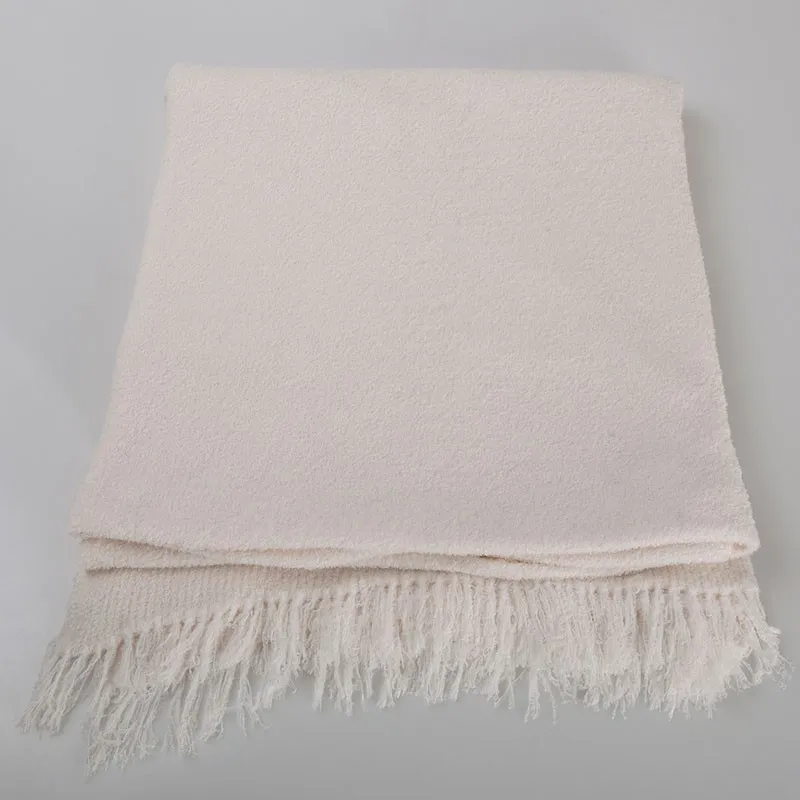
One of the most frustrating things when knitting a scarf is when the edges curl up, distorting the shape of the piece. Luckily, there are a few things you can do to prevent this from happening.
Try using a different stitch pattern for the edges of the scarf. Rather than knitting the first and last few stitches of each row in the same pattern as the body of the scarf, try something like ribbing, garter stitch, or seed stitch. These edging patterns create a flatter, more stable border that won’t curl.
Finally, consider blocking your finished scarf. This involves wetting the piece and then laying it flat to dry, using pins to help shape it into the correct dimensions. Blocking can help to even out any tension issues that may be causing the curling, leading to a more professional-looking finished product.
By following these tips, you’ll be able to create a knit scarf that lays flat and looks great.
How Many Stitches Should I Cast On for a Women's Knitted Scarf?
Yarn Weight
The weight of the yarn you're using for your scarf is the first major concern. Raise your hand if you know what gauge is; yarn weight is largely determined by gauge, which tells you how many stitches per inch knitting with the yarn will yield for you. Two different yarn lines in the same weight will often have a slightly different gauge. Check out our yarn weights guide for more information. The gauge on your yarn label should tell you how many stitches you need for four inches of fabric.
Needle Size
Your needle size factors into your gauge, and if you're using needles that are too big or too small for your weight of yarn, you'll get a largely different number of stitches per inch than the label on the yarn predicts. Your yarn label should tell you what size of needle is recommended for your yarn, but if it doesn't, you can check out our guide to knitting needle sizes.
Gauge
Ah, the beast itself. Together with your tension, your yarn weight and needle size will determine the gauge in which you'll knit. If you want to be extra sure, you can knit up a gauge swatch to make sure your knitting matches your expected gauge, but the chart below assumes that you're working in the correct knitting needle for your yarn size and achieving the right gauge. Check out this guide to calculating knitting gauge if you can't seem to match your expected guage.
Pattern Repeats
If you're looking to design your own scarf pattern or bring the perfect scarf in your head to life, you probably have a specific stitch pattern in mind. The number of stitches that you cast on should accommodate every stitch repeat you use in your scarf. For example, if your pattern repeat for the body of the hat is a 12-stitch repeat, you'll want to make sure that the number of stitches you cast on is a multiple of 12.
How to Knit a Women's Knitted Hat? Step by Step Guide
Step 1 - Cast on stitches on your fixed or interchangeable circular needles using the long-tail cast-on method. Place a stitch marker and carefully align the stitches in the same direction, and join to knit in the round.
Step 2 - Place a stitch marker for the beginning of the round. Knit four rounds. This will allow the knitting to curl to form the roll-up brim.
Step 3 - Switch to knit one stitch, Purl one ribbing, and knit round rounds in ribbing.
Step 4 - Work a knit on knitting together to decrease one stitch. Then work on the pattern stitch for seven inches or to the desired height.
Step 5 - Knit one round, then begin decreasing. Continue for a few more rounds. At this point, you can carefully try on the hat to see if you would like to add more length before beginning the decreases. If you need more height to the hat, add a few more rounds of pattern stitch before continuing.
Step 6- Cut yarn leaving about several inches of tail. Draw the tail through the remaining stitches and fasten off. Weave in yarn ends.
Step 7 – The hat is complete, add a pompom or a bow.
Fill the sink or a wash basin with cold water (60F).
Add a wool detergent or shampoo - you'll want to use a specialized detergent for wool instead of the regular stuff you use for your regular laundry as most detergents are too harsh for the natural fibers - just imagine washing your hire with Tide detergent and you'll understand why. Wool is made of the same keratin proteins as our own hair, and so you don't want to use any old harsh cleaner on it.
Add your women's knitted hat and gently swirl it in the water for three minutes. If your women's knitted hat is lined in fleece, you may want to turn it inside out and give special attention to the fleece lining where sweat might have accumulated.
Remove your wool cap from the soapy water and rinse it under cold water (60F) for a moment until the detergent has run off.
Let gravity due its job and wait for the excess water to run off the hat until it feels damp. Pure wool is naturally water resistant so it shouldn't be water logged. You can give it a gentle squeeze to let the water escape from the fibers. Be careful not to wring your hat as the wool fibers are delicate when wet.
Place the women's knitted hat on a towel and gently roll, squeezing out the water.
Lay flat to dry in the shade. You can put a fan on the wool beanie to speed the drying process. Within 12-24 hours, your women's knitted hat should be completely dry and ready to enjoy again!
Our Factory
Velafay Knitting Factory was founded in 2001 with a clear vision: to integrate traditional knitting craftsmanship with modern technological advancements. This approach allowed us to offer products that maintain the charm and durability of classic knitwear while meeting contemporary fashion standards. Our early years were focused on establishing a strong foundation, building a team of skilled artisans, and acquiring initial machinery that could support our ambitious goals.

FAQ
We're well-known as one of the leading knitted accessories manufacturers and suppliers in China. If you're going to buy high quality knitted accessories at competitive price, welcome to get quotation from our factory.
knitted one size fits all accessories, knitted overlocked accessories, knitted petite accessories