

What is the difference between knitting and crocheting accessories?
Aug 18, 2025
Hey there! As a supplier of knitted accessories, I often get asked about the difference between knitting and crocheting when it comes to making accessories. It's a great question, and in this blog, I'm gonna break it down for you.
Let's start with the basics. Knitting and crocheting are both age - old crafts used to create all sorts of cool stuff, especially accessories. But they have some key differences that set them apart.
Tools
The first thing you'll notice is the tools. When you're knitting, you use two long needles. These needles come in different sizes, and the size you choose affects the thickness of the stitches and the overall look of the finished piece. You can hold the needles in your hands in different ways, but usually, one needle holds the stitches, and you use the other to create new ones.
On the other hand, crocheting uses a single hook. The hook has a little curve at the end that helps you pick up and manipulate the yarn. Crochet hooks also come in various sizes, just like knitting needles. The size of the hook will change the size of the stitches and the texture of the item you're making.
Stitches
The stitches in knitting and crocheting are also quite different. In knitting, there are two main basic stitches: the knit stitch and the purl stitch. By combining these two stitches in different patterns, you can create all sorts of textures, like ribbing, stocking stitch, and cables. Knitted stitches are more uniform and tend to be flatter. For example, when you're making a Women's Knitted Hat, you can use simple knit and purl stitches to give it a nice, smooth look.
Crochet, however, has a wider variety of basic stitches. The most common ones are the chain stitch, single crochet, half - double crochet, and double crochet. These stitches can be combined in countless ways to create different textures and patterns. Crochet stitches are often more three - dimensional and can be used to create lacy, openwork designs or thick, solid pieces. For instance, if you're making a pair of Women's Slip Socks, crochet can give them a more textured and stretchy feel.
Speed
In terms of speed, crocheting is generally faster than knitting. Since you're working with a single hook, you can make stitches more quickly. You don't have to worry about transferring stitches from one needle to another like in knitting. This means that if you're in a hurry to make an accessory, crocheting might be the way to go. But knitting has its own charm. The slower pace can be more meditative, and it allows you to focus on the details of the stitch patterns.
Durability
When it comes to the durability of the finished accessories, both knitting and crocheting can create long - lasting items. However, knitted items tend to be more stretchy and can hold their shape well. The interlocking loops in knitting make the fabric strong and resistant to tearing. This is great for items like Women's Knitted Gloves, which need to stretch to fit your hands but also stay in good condition.
Crochet items, on the other hand, can be a bit more rigid, especially if you use thicker yarns or tighter stitches. The individual stitches in crochet are more independent, which can make the fabric less likely to unravel if a single stitch is pulled. So, if you're making an accessory that needs to be more structured, crochet might be a better choice.
Versatility
Both knitting and crocheting are incredibly versatile. You can make almost any type of accessory with either method. With knitting, you can create seamless tubes, which are perfect for making hats, mittens, and socks. You can also create complex cable patterns that add a lot of visual interest to your accessories.
Crochet is great for creating free - form shapes. You can start from the center and work your way out, which is ideal for making shawls, doilies, and amigurumi (cute little stuffed animals). You can also use crochet to add embellishments to knitted items, like adding a lace trim to a knitted scarf.
Yarn Usage
Yarn usage can vary between knitting and crocheting. Generally, knitting uses less yarn than crocheting for the same size project. This is because the stitches in knitting are more compact. If you're working with expensive or limited - quantity yarn, knitting might be a better option to make the most of your supply.
However, crochet can use yarn more creatively. You can use a single strand of yarn to create a lacy, delicate accessory, or you can combine multiple strands for a thicker, more luxurious look.
Ease of Learning
For beginners, crocheting is often considered easier to learn. There are fewer tools to manage (just one hook), and the basic stitches are relatively straightforward. You can pick up the chain stitch and single crochet in no time and start making simple accessories right away.
Knitting can be a bit more challenging at first. You need to learn how to hold the needles and transfer stitches properly. But once you get the hang of the basic stitches, it becomes much easier to progress and create more complex patterns.
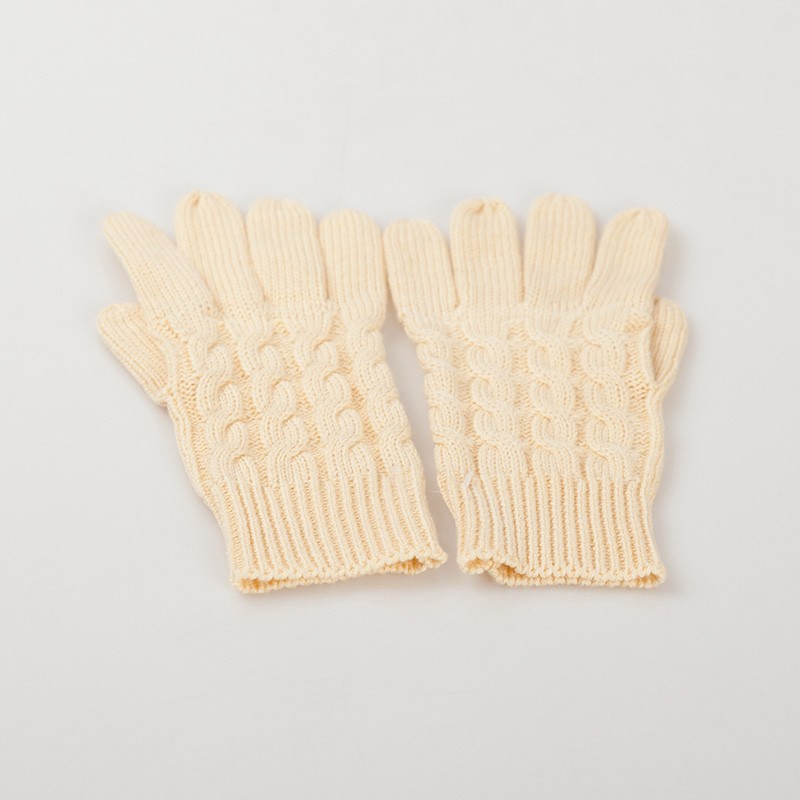

As a supplier of knitted accessories, I mainly focus on the beauty and quality of knitted products. Knitted accessories have a unique charm. They are soft, warm, and have a classic look that never goes out of style. Our Women's Knitted Hat is hand - crafted with love, using high - quality yarns that will keep you warm on cold days. The Women's Knitted Gloves are designed to fit perfectly and provide excellent dexterity, so you can go about your day without sacrificing style or comfort. And the Women's Slip Socks are not only cute but also incredibly cozy, making them perfect for lounging at home or slipping on under your shoes.
If you're a retailer or someone interested in purchasing our knitted accessories in bulk, I'd love to have a chat with you. Whether you're looking to stock up your store with high - quality knitted products or want to collaborate on a special project, we're here to work with you. Reach out, and let's start a conversation about how we can meet your needs.
References
- "The Complete Photo Guide to Knitting" by Jean Leinhauser
- "Crochet for Dummies" by Edie Eckman